Crowns and bridges
A broken tooth, a heavily filled tooth or one with an old crown can, in some cases, be restored with a new crown. When a tooth is missing, a bridge supported by the natural teeth on either side may also be considered.
Before recommending any treatment, the medical team assesses your teeth, roots and gums. The aim is to understand what can be kept and which solution is right for your case.

Do you want to restore a tooth or replace an old crown?
This page may be useful if:
You have a broken tooth or one with a large filling.
You have an old or broken crown, or one that needs to be assessed.
You have had root canal treatment and want to know whether the tooth can take a crown.
You are missing a tooth and want to know whether a bridge supported by the neighbouring teeth makes sense.
You have several worn or damaged teeth and have received a proposal for treatment with crowns.
A photo helps to show the problem, but on its own it cannot confirm whether the root and structure of the tooth are sufficient for a crown.
What is the difference between a crown and a bridge?
A crown restores a tooth that is still in the mouth. A bridge replaces a missing tooth, resting on neighbouring natural teeth that are able to support it. Whether either is suitable depends on the condition of each tooth and the plan for the whole area.

Crown on a natural tooth
A custom-made piece covers the tooth once it has been prepared. It may be considered when the tooth is heavily filled, broken or needs its shape and function restored. First, it must be confirmed that the tooth can be kept.

Replacing an old crown
A crown that is loose, damaged or has problems underneath should be assessed before it is replaced. The team checks the condition of the tooth and treats whatever is necessary before making the new crown.

Bridge on natural teeth
A bridge can fill a gap using the teeth on either side as support. These teeth need to be in a condition to support it and, with a conventional bridge, may need to be prepared. If they are healthy, the team will also explain the options that avoid filing them down.
If a tooth is missing and the neighbouring teeth are healthy, see Single dental implant. If several teeth are missing and you are looking for an implant-supported bridge, see Several missing teeth.
First, understand what can be kept
The choice does not depend only on the visible part of the tooth. The team assesses:
Whether there is enough structure and whether there are signs of fracture or infection.
The health of the gum and the surrounding bone.
For a bridge, whether they can act as supports and whether they already need treatment.
How the new teeth will fit together when you chew.
What can be achieved, without promising the same result for everyone.
What if the teeth on either side are healthy? To place a conventional bridge, the teeth that support it may need to be filed down. If those teeth are healthy, we will also explain other ways of replacing the missing tooth, such as an implant, when possible. If the neighbouring teeth already need crowns, a bridge may make sense. The choice depends on the medical assessment.
How the treatment works
Allow for a stay of 2 to 5 days in Portugal, depending on the treatment needed and the number of crowns or bridge units to be fitted. We tell you the expected length in your plan before you book your trip. The plan and quote are provided remotely; the treatment is confirmed at the in-person consultation.
Initial remote assessment
Send us a recent X-ray of the teeth to be treated and photos. The X-ray is needed to assess the roots and understand whether the teeth can be kept to receive crowns or support a bridge. If you do not yet have one, we can send you a referral to have it taken near you. With this information, the medical team gives you a plan and quote before the trip. The in-person consultation confirms the details before treatment.
Preparing your case
Once you have accepted the quote, we answer your questions and organise the appointments needed. When a case requires an additional clinical assessment before the trip, a conversation with the medical team is scheduled.
Clinical confirmation
At the in-person consultation, the team confirms the condition of your teeth, roots and gums. They carry out any additional scans indicated and confirm the plan with you before starting treatment. If you wish, you can have an in-person consultation beforehand, but you do not need to travel just to request your first quote.
Treatment and records
The necessary treatment is carried out and the teeth that will receive crowns or support a bridge are prepared. Impressions or digital records are taken to make the custom work. If necessary and clinically possible, a temporary solution is fitted while the final work is being made.
Final adjustments
The team checks the fit, the bite and the appearance of the crowns or bridge before the final fitting. They explain how to clean and care for the work.
Care and follow-up
Once you are back home, keep up the recommended care and check-ups. If any difficulty arises, contact us so that the clinical team can advise on the next steps.
Restored natural teeth cases
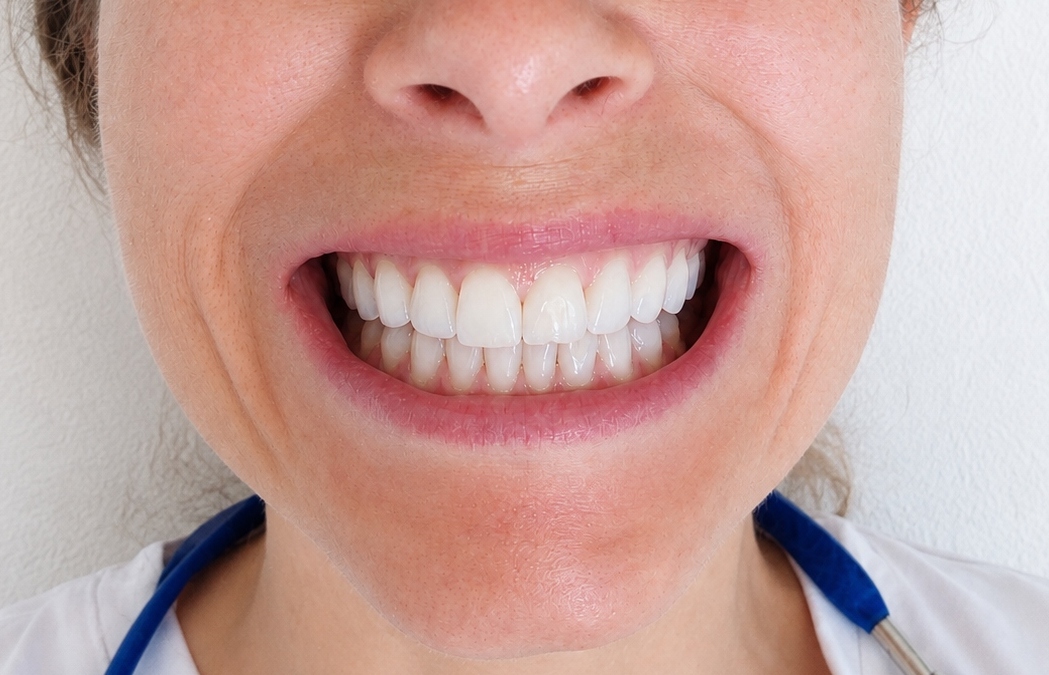
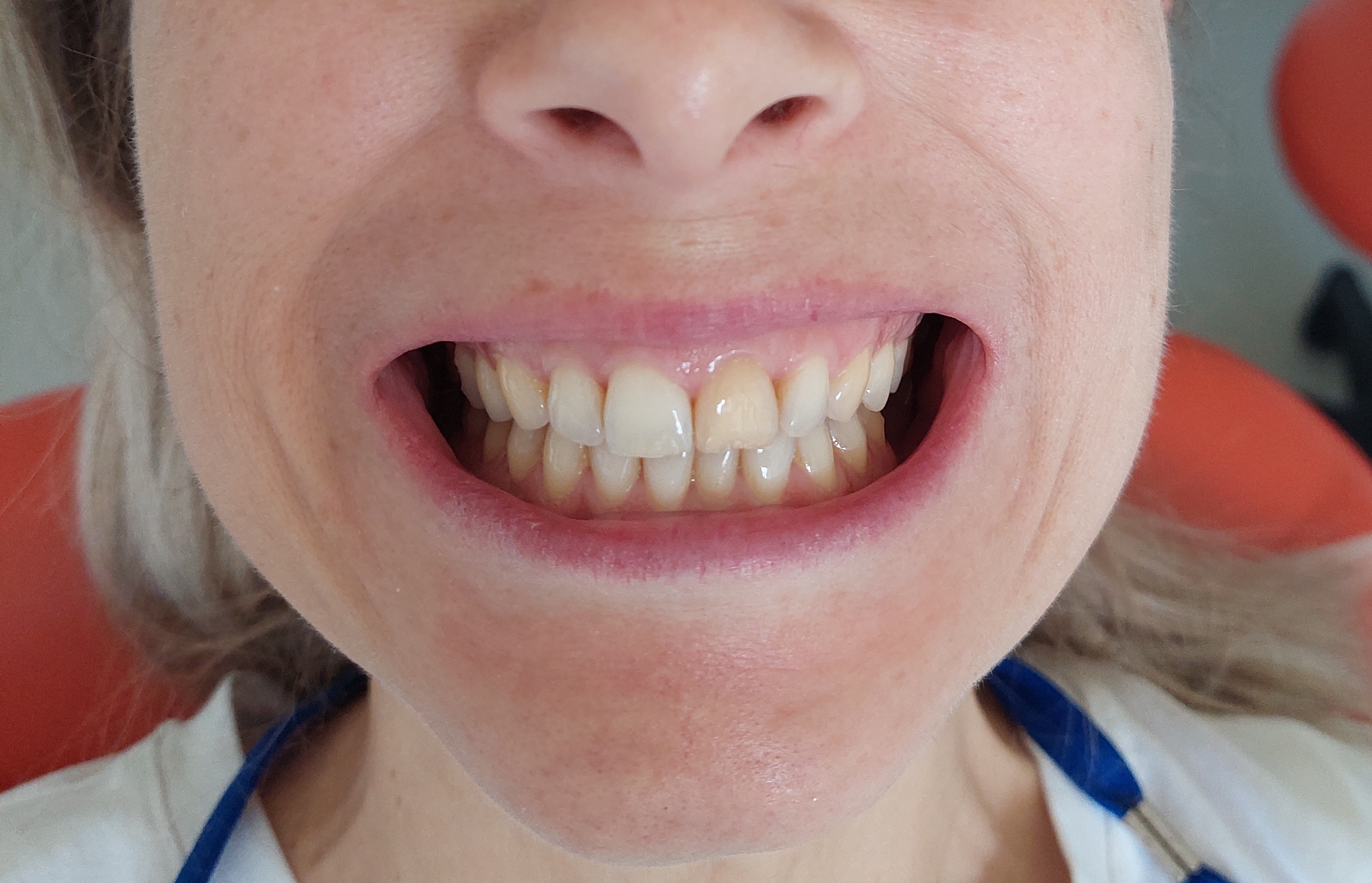
Know what work you will receive and how to care for it
In most cases, we use zirconia for crowns and bridges on natural teeth. It is a highly resistant material, suited to the forces of chewing. As it contains no metal, it gives a natural appearance and avoids the dark line that can appear along the gum with crowns that contain metal. It is a fully hypoallergenic material and very well tolerated by the gum tissue.
For all crowns and bridges on natural teeth, we use a scanner that works like a small camera. It captures your teeth with millimetre precision and creates a three-dimensional model of your mouth, without the trays of impression paste used for traditional moulds. The process is more comfortable and the files go straight to the laboratory, making this stage quicker. The scanner also records the colour and the different shades of your teeth, so that the laboratory can create a colour that blends in with the surrounding teeth.
At the final fitting, we check the fit, the bite, the colour and the appearance, for a harmonious, highly aesthetic result.